You can easily track rankings, clicks, and traffic in traditional SEO, but in AI search environments… not so much. AEO tools like Profound and Peec AI close the gap and provide much-needed insight into your brand’s visibility within AI-generated answers, but they serve different team types and use cases.
These tools are not entirely 1:1 in terms of what they offer, although they both provide AI visibility metrics so you can optimize your content and strategy for AI search.
Profound vs. Peec AI At A Glance
| Compare | Profound | Peec AI |
| Focus | Enterprise-level AEO suite for answer engine insights, agent (crawler) analytics, prompt search volume, product placement (ecommerce) tracking | Simplified entry-level prompt-based AI visibility metrics and analytics (positioning, source/sentiment analysis, competitor benchmarking) |
| Crawler/bot insights | Yes, with agent analytics | No |
| Citations/source analysis | Yes | Yes |
| Pricing | Starts at $99/month (tracking only ChatGPT); next tier is $399/month for three answer engines tracked; custom-priced enterprise tier available (with up to 10 answer engines) | Starts at €89/month (tracking ChatGPT, Perplexity, Google AIO); next tier is €199/month for more prompts/answers; custom-priced enterprise tier available |
| Best for | Larger teams that need AEO with technical (crawler) analytics and broader modules, and who can support a heavier setup time/budget-wise | Teams of any size that need a lighter-weight AEO tool with beginner-friendly prompt tracking and competitor insights |
AI-driven search is reshaping the way people discover brands (or make purchase decisions). As folks are relying more on tools like ChatGPT, Google’s AI Overview (AIO), or tools like Perplexity, visibility in those spaces has become a new competitive battleground.
I’ll take you on a deep dive into Profound and Peec AI so you can understand exactly what each AEO tool offers along with the pros and cons to consider, but I’ll also tell you what AEO actually is and why a tool (or even agency) can help your brand.
What AEO is and Why a Dedicated Tool Can Maximize Results

AEO stands for Answer Engine Optimization; if you’ve ever worked with search engine optimization (SEO) before, you’re likely to be at least a little familiar with the concept. While keywords are a staple of SEO, AEO relies on prompts (or queries). Those prompts are the phrases, often long-tail, that people are using in AI-powered searches.
While SEO focuses on getting your site or content to rank in search engine results, AEO is the practice of improving visibility specifically within AI-generated answer environments like ChatGPT, Claude, Perplexity, and even AI Overviews in Google, Bing, or other browsers.
This is separate from SEO, although some content creation fundamentals still apply to both.
AI answer engines and LLMs (large language models) do not all work the exact same way, but their primary behavior is based on these two things:
- Training data gathered from public web content, human-created data, and licensed datasets, used to shape language and understanding. This is not really a source of citation or brand mentions as much as it is background knowledge used by the LLM.
- Live retrieval from articles, videos, knowledge bases, trusted domains, product/shopping feeds, and even public conversations (forums like Reddit). This is where most citations, brand mentions, and/or summaries actually come from.
Answer engines (like ChatGPT, Claude, Perplexity, Copilot, and others) strongly favor content that’s authoritative, structured, and can easily be summarized. Human experience is highly valued when it acts as evidence, which is similar to Google’s E-E-A-T framework (Experience, Expertise, Authority, Trust). Reviews and comparisons have an especially high impact when AI needs “human judgment” on a topic, like “backpacks that make TSA checkpoints faster” or “multi-styling hair tools for long hair,” as quick examples.
And while it’s relatively “simple” to gain insights into search engine ranking, generative AI answers are a lot harder to track because there’s often no click, no referrer, no obvious “ranking” for a keyword (or prompt), and no alert when you appear in (or disappear from) the results.
Tools like Profound and Peec AI exist to make that layer measurable, and without them, most marketing teams are left guessing about their brand’s visibility in AI-powered environments.
Good AEO tools let you know:
- Where, when, and how your brand is being mentioned and what prompts (user queries) are triggering them
- What your brand sentiment is like (positive, negative, or neutral)
- Which competitors are showing up for prompts that you want to rank for (if you aren’t already)
- What sources AI engines are citing, including the types of pages being cited
- High-intent prompts and competitive gaps that need better coverage
- Areas where your visibility is slipping (or gaining) over time
Are AEO Tools Actually Worth It?
On their own, AEO tools will not create visibility; they expose what users (or potential customers) are encountering within AI search environments, and whether they’re “worth” it really depends on how important monitoring and optimization is to you.
AEO tools are definitely worth it if:
- Your brand or products are being compared in a lot of “best” or “versus” or “alternatives” topics and prompts
- AI-generated answers drive brand awareness in your particular industry
- Higher-ups are asking about AI visibility
- You’re ready to act on insights to optimize existing content or maximize placements and citations
- You want to understand competitive displacement in AI search
- You want to be included in AI systems as a viable option for whatever prompts most relate to your business or brand
AEO tools don’t guarantee visibility, but they do provide you with the means to understand where you’re losing, and where you can gain visibility by course correcting. For a lot of businesses and brands, the cost of not knowing will often exceed the cost of using the tool.
Should You Use AEO Tools or Hire an Agency?
There is no right answer to this question, since it really depends a lot on what you need, what you’re able to do yourself (or have your team do), and of course, your budget and timeline.
If you already have content and growth resources in-house and can work from insights to create and deploy a strategy that will improve your AI visibility, then an AEO tool can be a better option.
But an AEO agency like ScaleVisible is a good choice if:
- You lack in-house AEO expertise
- You need help defining strategy and following through with the execution
- You want to move faster than your in-house content teams can manage while avoiding missteps
- You want improved visibility, but prefer a more hands-off approach or cannot spend your internal team’s bandwidth on the initiative
If you only need insights, a tool is probably best; if you need strategy and execution that drives results, hire an agency.
A Closer Look at Profound
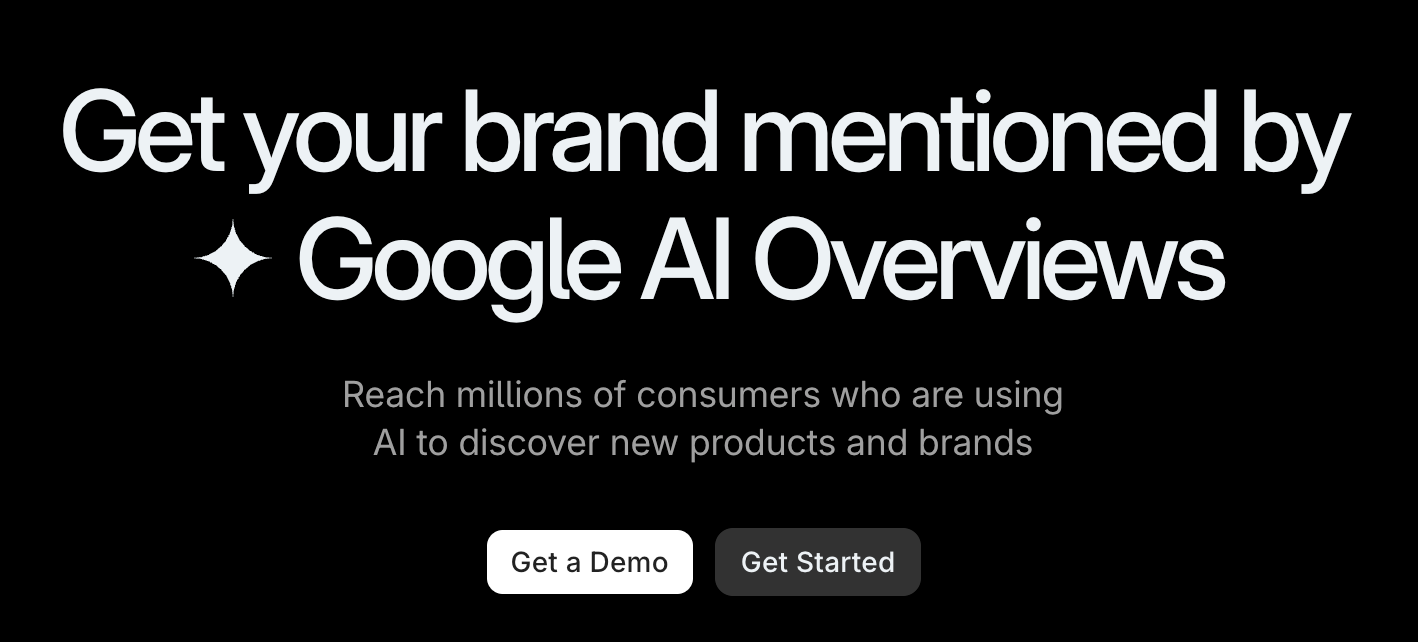
Profound admittedly goes farther than Peec AI in terms of what it offers:
- Tracking your brand’s presence in AI answers
- Analyzing when and how AI crawlers interpret your own website content
- Providing demand intelligence (sort of like keyword search volume, only for AI prompts)
- Shopping visibility for ecommerce brands
This is a much more robust AEO tool, but for teams that need to go beyond “basic” AI visibility metrics, it can be well worth its weight.
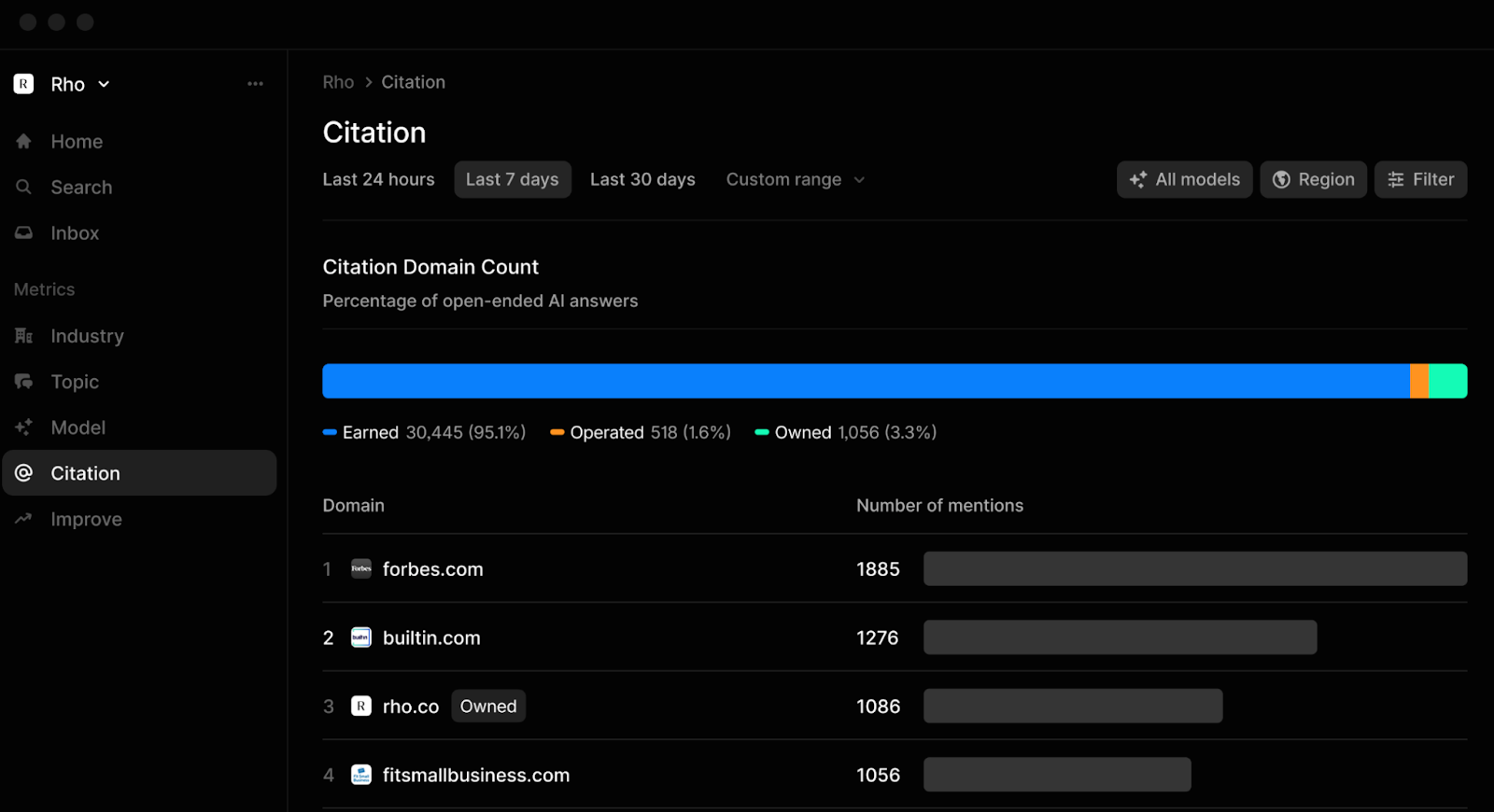
The visibility monitoring is what you’d expect and is similar to Peec AI, tracking where your brand is being mentioned, how, and in what context, so you can understand trends, see citations by page and domain, and track your competition.
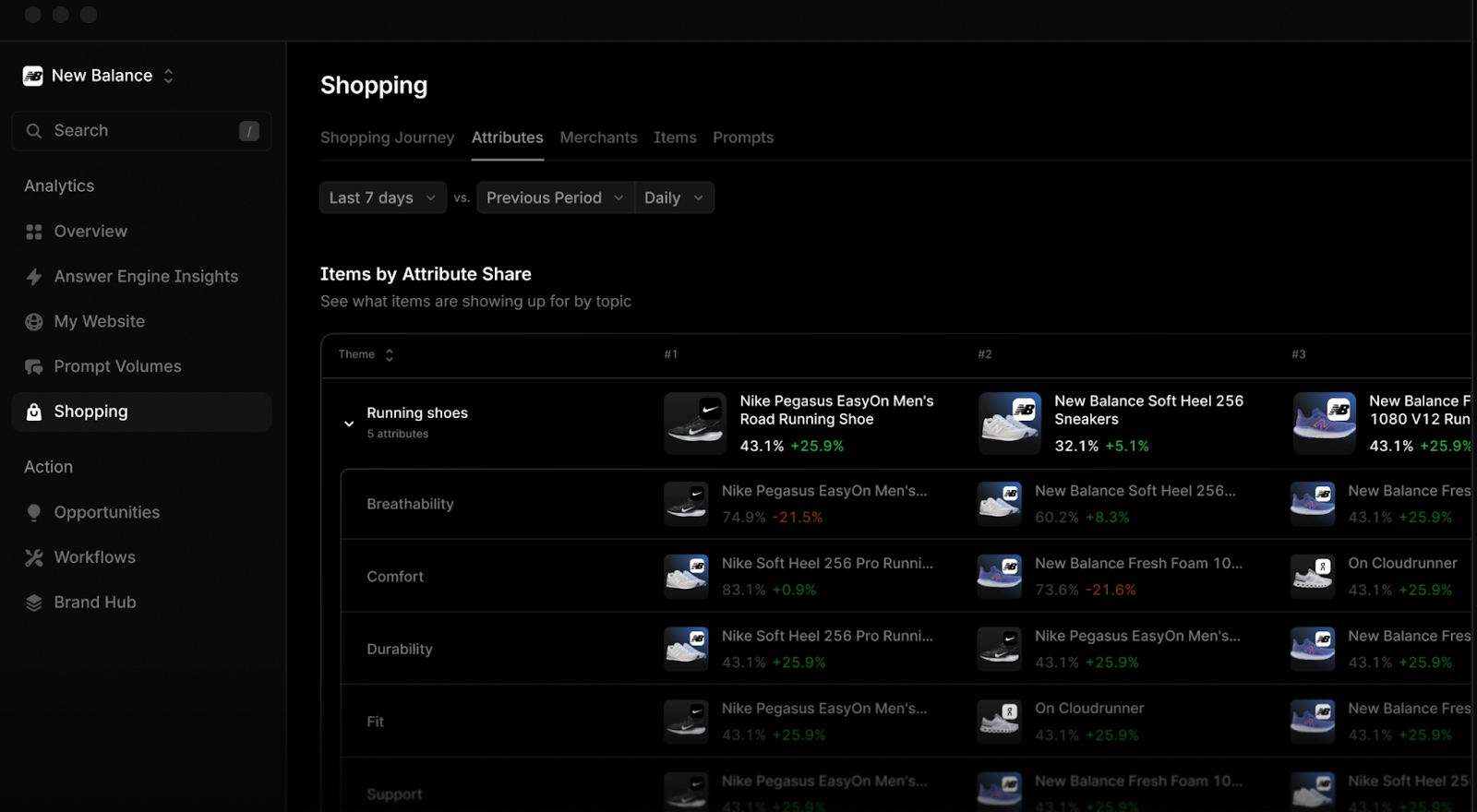
For ecommerce brands, Profound also offers AI shopping visibility so you can see which products are appearing in shopping-specific queries and what products are driving the most visibility.
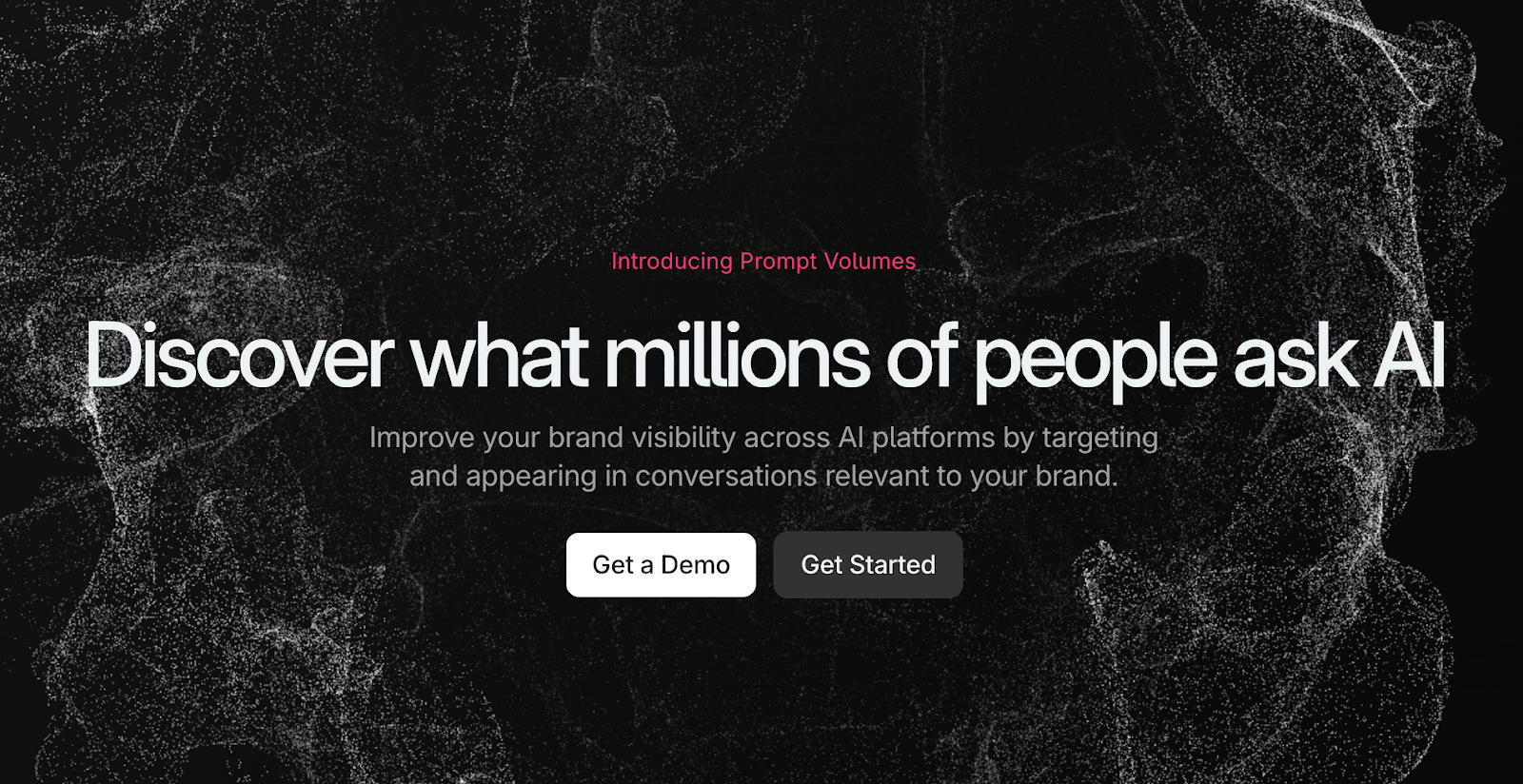
But Profound also lets you see what real people are asking within AI search environments; specifically the prompts (queries) they’re using, and how often. This insight helps content teams to figure out which topics to prioritize for improved visibility.
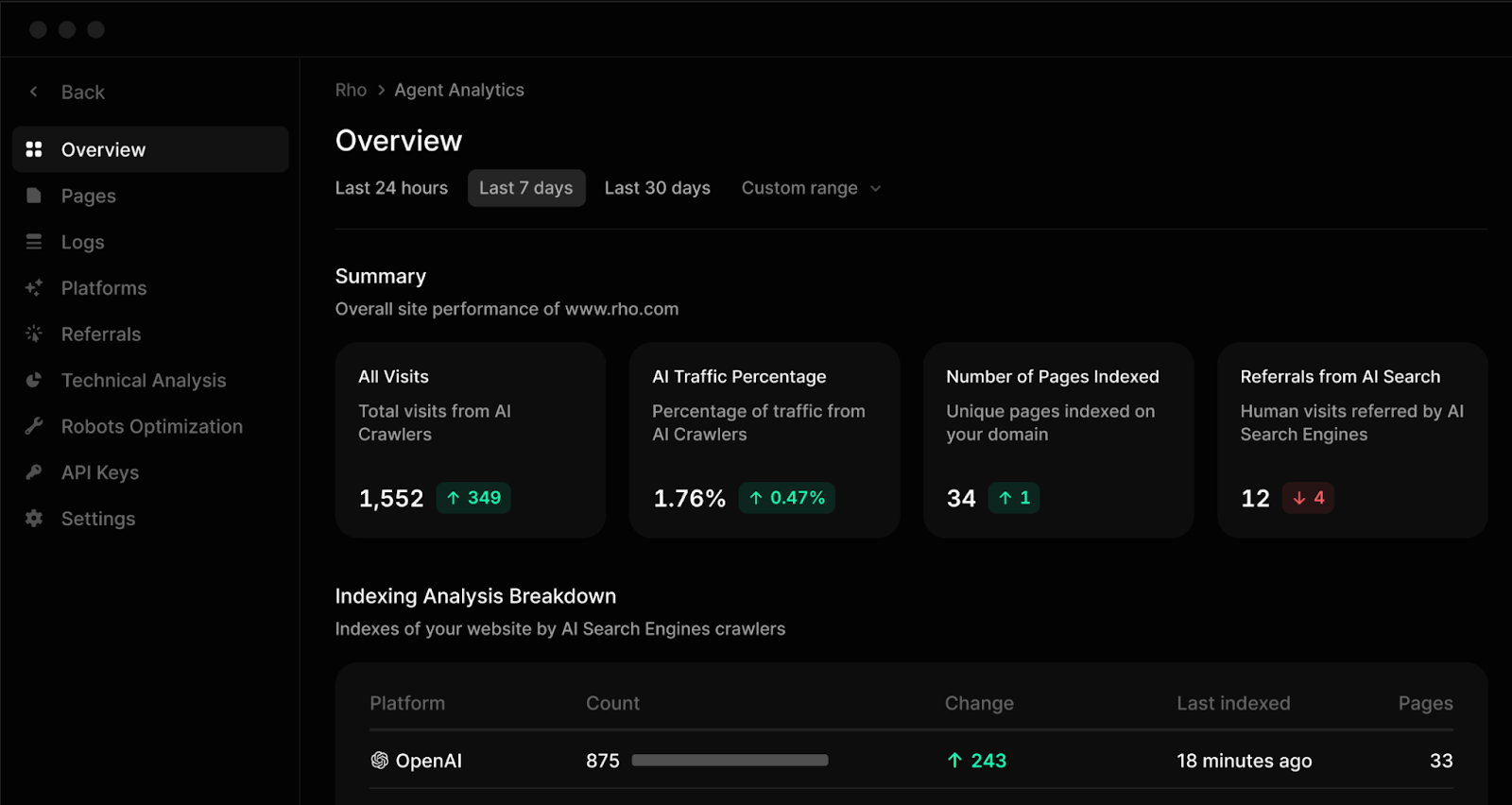
Another differentiator from Peec is the agent analytics, which monitors how often AI bots are crawling your own site and content, and even which pages are crawled the most (or being ignored). From a technical standpoint, this helps you to discover areas where crawling is blocked or underperforming so issues can be addressed and improved.
Finally, Profound has tools and templates that help teams to either generate new content or optimize existing content specifically for AI answers. The content optimizer gives an AEO Content Score, which is a machine-learning metric that can predict the likelihood of future citations.
If all of this sounds like a lot, that’s because it is… but Profound is one of the most comprehensive platforms for AEO. That said, it can be too much for some, and it isn’t the best choice for every brand.
Profound Pros:
- Comprehensive AI visibility tracking for mentions, citations, sentiment, and competitor benchmarking
- Tracking and monitoring for shopping/ecommerce
- Prompt volume metrics and insights help content strategies
- AI bot/crawler analytics to find blocks/potential issues that are hindering visibility
- Content generation and optimization tools
- Enterprise-grade security and compliance for large organizations or regulated industries
Profound Cons:
- Higher price point compared to Peec AI; the lowest tier at Profound starts at $99 per month, but only includes ChatGPT tracking
- Steeper learning curve and lengthier initial setup with integrations
- Teams will require technical bandwidth
- Likely overkill for smaller teams or startups that only need basic analytics and insight
A Closer Look At Peec AI
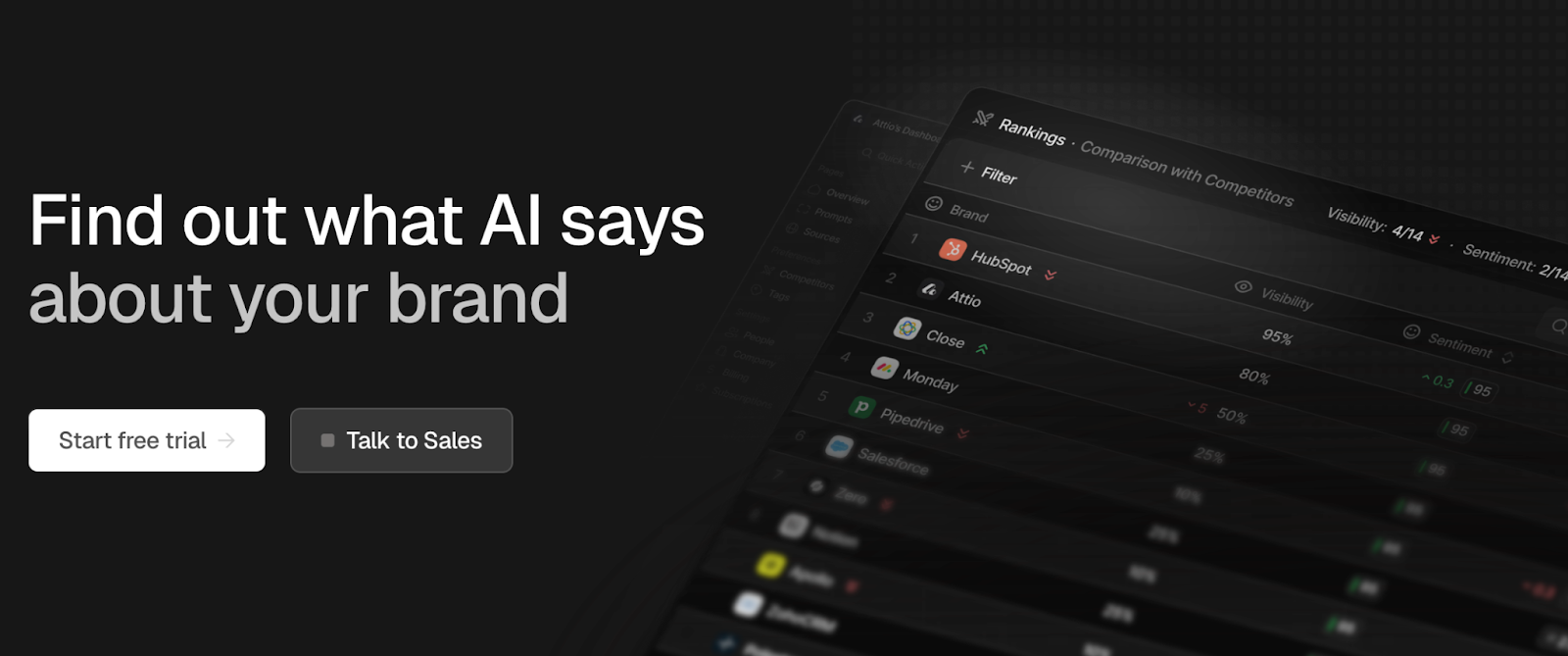
Peec AI is a much more straightforward AEO tool that lets you define prompts (although it can also suggest them for you) to monitor visibility, citations, brand sentiment, and your closest competitors’ performance.
The source and citation metrics in Peec AI tell you which domains and pages are showing up in AI search environments and how often they’re being cited, so you can monitor your positioning and spot trends over time.
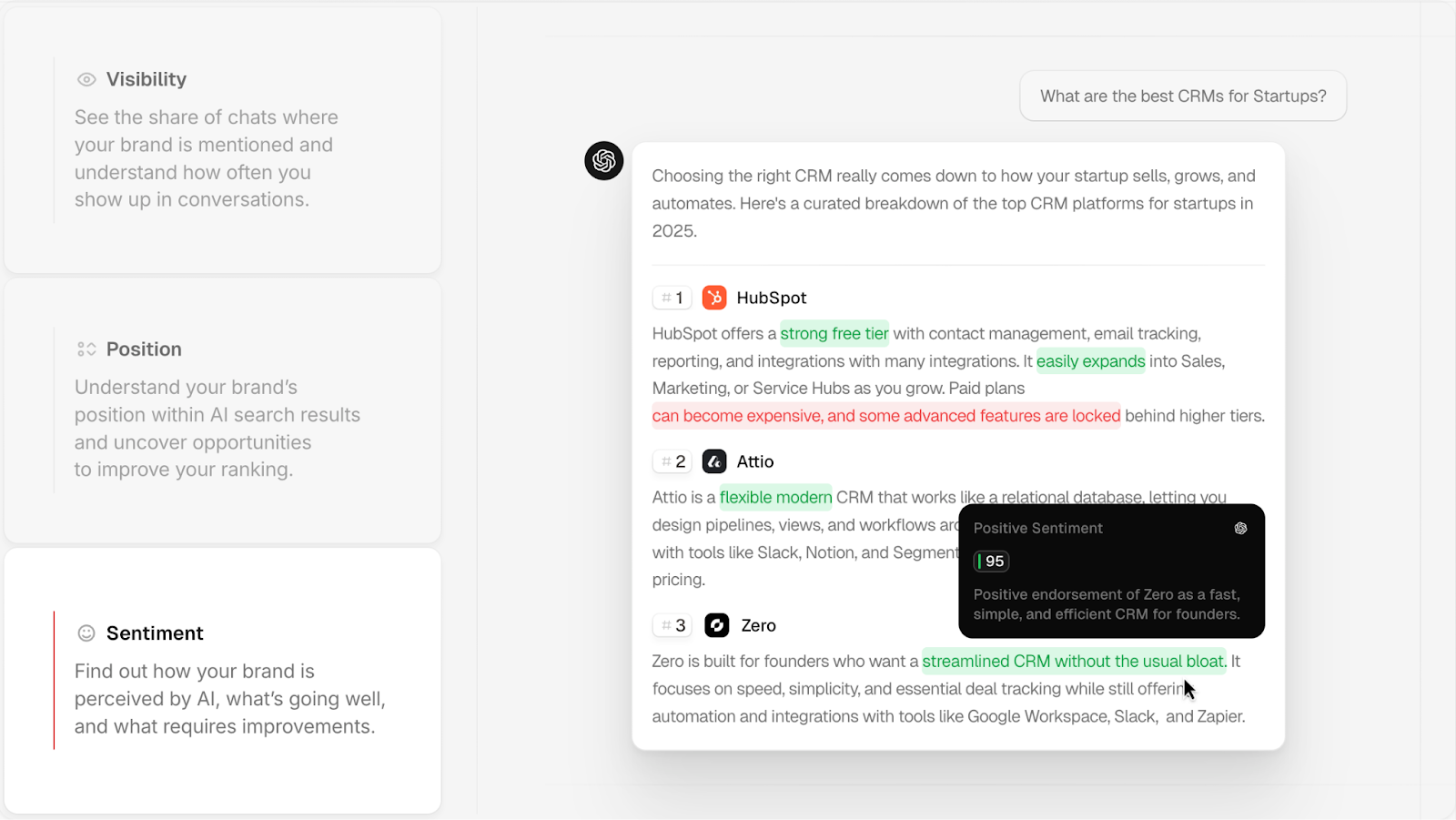
Sentiment tracking provides necessary insight into the way that AI answers are presenting your brand, and whether that’s in a positive, neutral, or even negative light. Especially if you need to steer the narrative in a better direction, this information is invaluable.
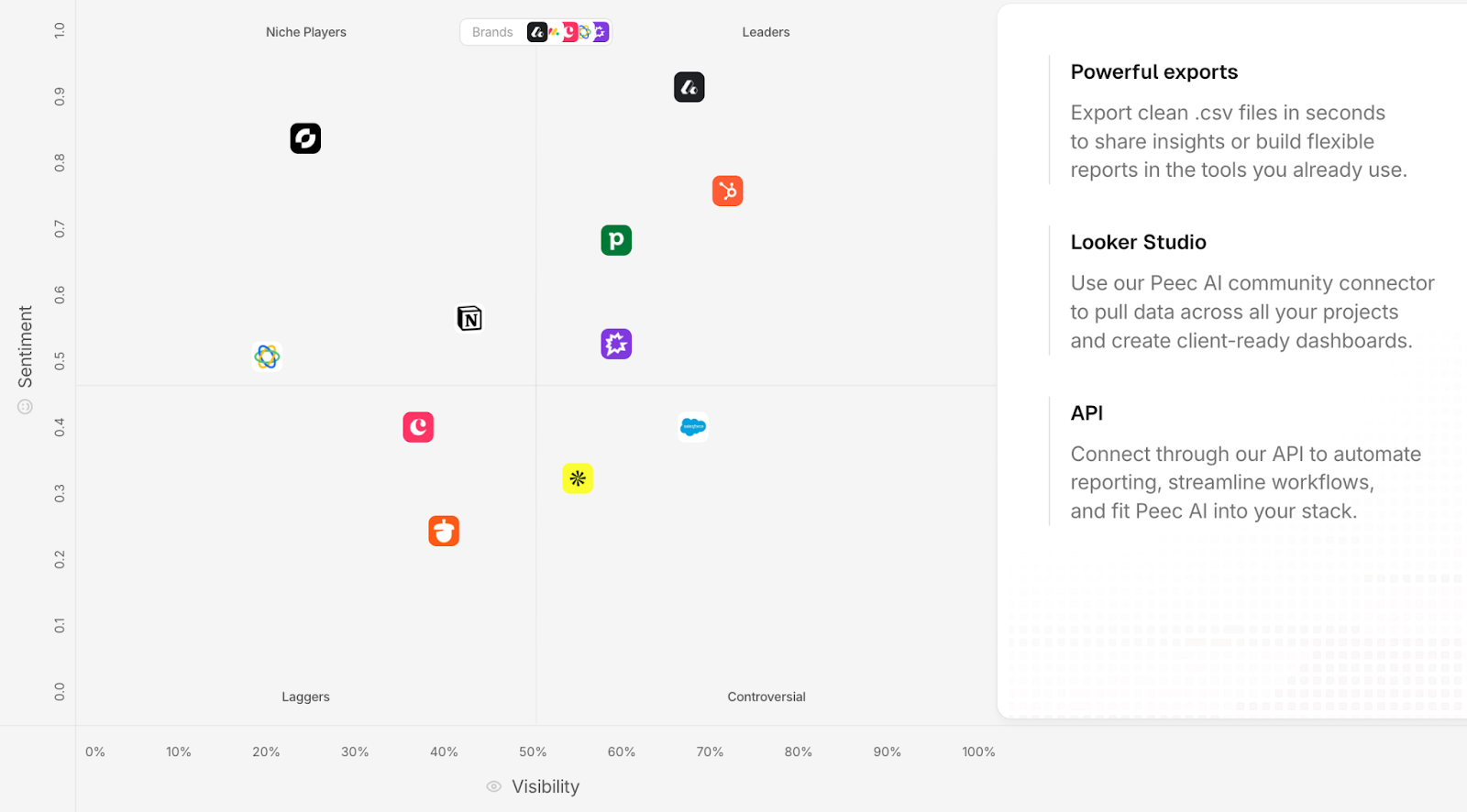
Peec AI also makes it easy to compare yourself against your competitors for the same prompts you’re trying to rank for (or maintain positioning in), and being able to spot their trends will help you to optimize your own strategy to overtake them if needed.
One thing that I think is especially great about Peec AI is the way it gets the data it retrieves. It does not rely on APIs; instead, it uses a UI-based scraper that gets the information directly from a search environment (ChatGPT, Perplexity, and Google’s AI Overviews are standards). This provides the most real-world (and accurate) visibility insights.
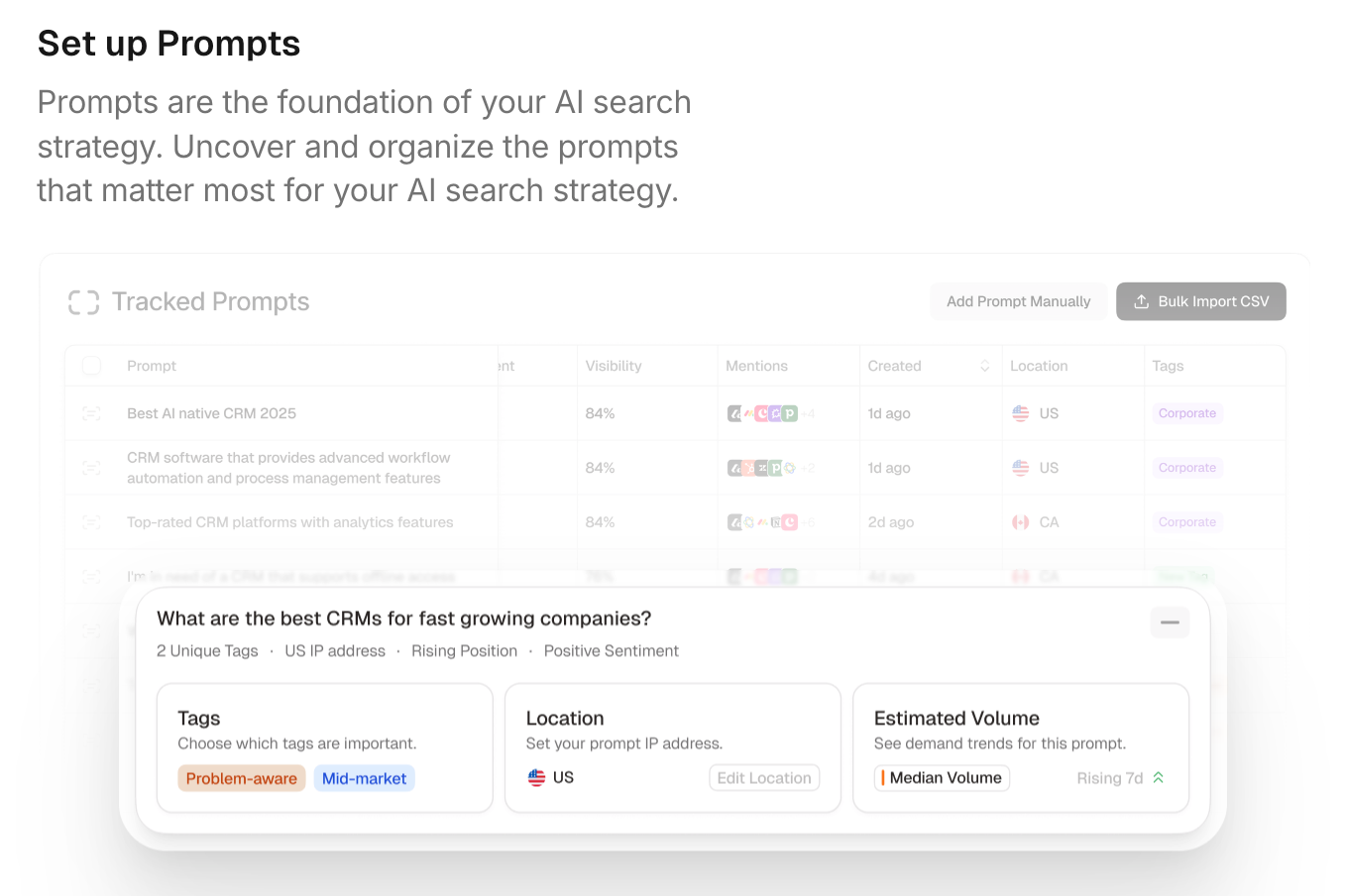
Having used Peec myself, I can attest that the setup is fast and you’re tracking visibility in no time. It’s very lightweight and even if you’re a complete beginner, it’s a pretty approachable tool, so it’s a great choice for small teams or even solopreneurs who want to track their AI visibility and optimize their strategy.
That said, it is definitely on the “basic” side, especially compared to Profound.
Peec AI Pros:
- Easy and straightforward prompt-driven AI visibility tracking with competitor benchmarking
- Has a suggested prompts feature to save you guesswork
- Simple dashboard that is intuitive with a clean UI and quick setup
- Very beginner-friendly
- Affordable entry-level tier that tracks ChatGPT, Perplexity, and Google AI Overviews
- Unlimited seats in every plan, so it’s great for agencies
Peec AI Cons:
- Lacks the deeper technical insights (including AI crawlers) and content workflows offered by Profound
- Lower tiers have a limit on the number of prompts and answers tracked each month
- Sentiment signals are more basic
- Gemini, Claude, Google AI Mode, and others are available with additional fees
How To Choose Between Profound & Peec AI
If you’re trying to decide between these two AEO tools, it’s important to look at your team’s needs (and capabilities!), along with what you actually intend to do with the insights gained.
Profound is best if your team:
- Needs crawler (how AI bots access and interpret your site) and indexing visibility
- Wants to optimize for ecommerce/shopping
- Needs enterprise-level analytics, reporting, and dashboards
- Has the technical resources for integrations
When you need to understand how AI crawlers are interacting with your pages (or, on the technical side, what’s blocking visibility), or if you want to understand general site health, trends, and risk across generative answer channels, Profound is a strong fit.
Peec AI is best if your team:
- Wants measurable prompt-level insight fast to understand where or why your brand is (or isn’t) visible in AI spaces
- Cares more about citations and competitor benchmarking
- Wants predictable pricing with an easy setup
- Is small with a limited technical focus
Especially if your budget or team bandwidth is limited, Peec AI is a great starting point into AI visibility monitoring and optimization before scaling into a deeper (and more involved) platform like Profound later on.
Closing Thoughts
There isn’t a one-size-fits-all AEO tool, only the ones that align with your brand’s needs, your team, your budget, and your experience. Profound brings enterprise-level diagnostics and depth, while Peec AI delivers entry-level clarity and insights.
Neither tool can “guarantee” AI visibility since the execution is in your hands (or an agency’s, if you take that route), but the right AEO tool will help you avoid strategizing (or optimizing) in the dark.